|
|
|
 |
ソフィアート・ガーデン物語 >>前の物語へ >>次の物語へ
■第11話 「光と闇 2」 2012年4月24日
 太陽を崇めるという気持ちは原始的なものでしょう。「光」は希望や生命を、「闇」は死を連想させるものかもしれません。
太陽の光は全ての恵みの源であり、火の輝きは人間の力の源であり、すべての地上の生きものは、太陽と地球の関係が操る季節のめぐり、循環の中でこそ生きていくことが可能です。
あまりに太陽の光が容赦なく降り注ぐ地域は別でしょうが、どこでもたいてい、陽光の恵みを自分の田畑や家の中まで取り入れようとします。特にここ軽井沢は寒冷地ゆえ、冬は凍るように寒いのですが晴れ間が多いため、燦々と太陽光が差し込む室内は温室のような温かさを感じます。
 そのため多くの家は、冬の太陽光を室内に取り入れようとなるべく大きく窓を設けています。私どもの自宅も、南側には障子ガラスを貼った大きな高窓を設け、そこから陽光が居間の部屋全体に降り注ぎ、外は氷点下の真冬日(一日中零度を超えない)のときでも昼間は暖房がいらないと錯覚しそうなほど温かいこともあります。
「太陽さま!」と崇めたくなるほど冬はありがたさを実感します。
なかには冬季の日差しを求めて、光を遮るものをすべて排除し、日本家屋の知恵である軒庇を極端に短くし、さらには庭木などをすべて切り倒す人もいます。
個人住宅で台風による倒木防止のために枝を剪定するなどの適切な手入れは必要ですが、季節は巡り、夏になったとき、日当たり優先で庭木をすべて切り倒してしまった家は、後悔することになるかもしれません。
 軽井沢の日差しは高原のためか大変強く、家の中にいても日焼けする(!)ほどですし、夏に木陰のないところでは、緑陰に守られるという軽井沢ならではの恩恵も受けられません。
軽井沢の家屋にはクーラーがないのが普通で、当然、私どもにもエアコンはありません。夏は南側の大きな落葉樹が葉を広げ、南西には大きなモミの木が木陰を落とし、庭は草が茂っているため、全ての窓を開けて風を通すだけで涼しく過ごせます。
軽井沢の夏は霧が多く、あまりに湿度が高いときは窓を閉めますが、どんなに暑い日でも日没後はすぐに気温が下がり、窓を開けて寝ると風邪をひくほど冷えますので、冷房は要らないのです。扇風機はありますが、それさえも夏よりむしろ、冬に室内の温度を均等にするために使うことが多いです。
 しかし周りがアスファルトで覆われ、建物が密集し、日差しを遮る木がほとんど無いような地域では、軽井沢とはいっても冷房なしでは過ごせないような場所もあります。商業施設やその周辺の住宅街などの一部の場所では、日本の多くの都会同様、クーラーが無ければ苦しいほど暑くなります。
車でレジャーに来た人々が、軽井沢恒例の大渋滞に巻き込まれ、アスファルトの道で強すぎる日差しにうんざりしている様子を散歩しながら目にしするたびに、ちょっと気の毒になります。
車を駐車場に置いて身軽になり、その大混雑の道を一本裏に入れば、涼しくていい香りのする森の散歩を楽しめるのになあ・・・、
とお節介な気持ちになりますが、人にはそれぞれの事情があるわけで、大渋滞はいっこうに無くなる気配はありません。
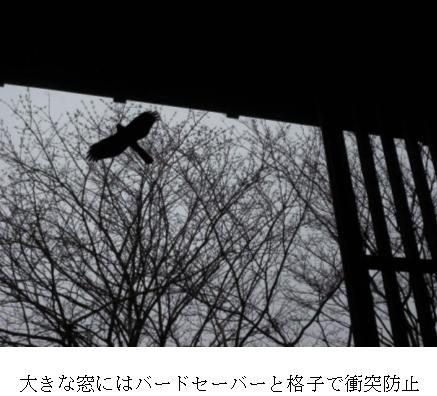 太陽光を取り巻く人間模様は、ときに野鳥に大変な迷惑をかけることになります。大きな硝子(ガラス)窓や硝子の開口部を設けているデザイン重視の建物が軽井沢にもたくさんありますが、こうした建築物を目にするたびに気がかりなことがあります。窓硝子に野鳥が衝突するという問題です。
あたかも森につながるかのごとく、透明な硝子で空間を遮っているだけ、という開口部は、意図せずとも野鳥の激突を招いてしまい、彼らのいのちを危険にさらす恐れがある、ということを、この駄文を読んでいただいた皆様の記憶の中に、ぜひとどめていただきたいのです。
小鳥たちは縄張り争いなどで全速力で追いかけっこをしたりします。そのときは枝の間をすり抜けるように曲芸飛行を繰り広げますが、明るい日差しの中、大きな硝子窓には木漏れ日が映りこみます。小鳥たちは森へ続く空間が広がっていることを信じて疑わず、全力でそこにぶつかってしまいます。その結果、嘴や首、羽が折れてしまったり、即死してしまう小鳥たちが数多くいます。このような怪我をすれば、野生では生き残ることは難しく、結局衰弱して死に至ることが多いようです。人間だけが光を楽しみ、他の生きものから希望といのちという「光」を奪い、死という「闇」へ追いやることは、許されることではありません。
光を求めるのは大いに結構ですが、その際には硝子などに鳥の衝突防止の対策をすれば、罪も無い友を傷つけることが防げる、ということを知っていただきたいのです。日本の知恵を活かして軒を深くすることだけでも有効ですし、バードセーバーと呼ばれるシールを貼って、鳥に硝子の障害物を気づかせることも大切なことです。
一人でも多くの人が、野鳥にとって危険な建築物を作らない、という意志と配慮をもって工夫すれば、その構造物と庭は、鳥たちにとって、ひいてはそこに集う人にとってもいい環境になることは間違いありません。
人間の希望である光を、独り占めすることなく、ほかの生きものにとっての希望としても分かち合いたい、そのために「知恵」と「わざ」を使うことが人間にはできるはずです。弊社ソフィアートの社名には、様々な場面で、そうした「知恵」(ソフィア)と「わざ」(アート)を発揮する人や企業を応援したい、という私どもの思い(ハート)が込められています。
『 ソフィアート・ガーデン物語 』 第11話 「光と闇 2」
有限会社ソフィアート スタッフM( 竺原 みき )
関連する物語
>> 第10話「光と闇 1」
>> 第11話「光と闇 2」
Episode 11: “Light and Darkness II”
April 24, 2012
The instinct to revere the sun must be as old as humanity itself. “Light” evokes hope and life, while “darkness” often calls to mind death.
The sun’s radiance is the source of all blessings, the brilliance of fire the wellspring of human strength, and every creature on this earth survives only within the cycles of the seasons?those eternal rhythms governed by the relationship between sun and earth.
Of course, there are lands where the sun burns too harshly for its light to feel like a blessing. But almost everywhere, people seek to draw sunlight into their fields, into their homes. Here in Karuizawa, with its biting winters, that desire is all the stronger. Though the cold can be severe, clear skies abound, and when the sunlight streams into a room, it warms the space like a greenhouse.
That is why so many homes here have been built with large windows, designed to capture the low-angled light of winter. Our own home has a broad, high window on the southern side, its panes covered with shoji paper. When the sun pours through it, the entire living room fills with brightness and warmth?so much so that, even on subzero days when the temperature never climbs above freezing, one might almost forget the need for heating. At such times, I cannot help but feel an urge to bow my head in gratitude, whispering, “O Sun, how we owe you everything!”
There are some, however, who, in pursuit of that winter light, go to extremes?cutting short the protective eaves of their houses, felling every tree that might cast shade, erasing the natural screen between home and garden. It is true that prudent pruning is needed to prevent storm damage, but when summer comes, such light-hungry houses may discover regret.
For the summer sun here in the highlands is no gentle thing. Its rays are fierce enough that one can even tan indoors. Without the shelter of broad leaves and deep shadows, the heat can be relentless. Unlike urban homes, most houses in Karuizawa are built without air conditioning, ours included. And yet, thanks to the lush canopy of deciduous trees to the south, the towering fir to the southwest, and the garden grasses thick underfoot, we manage perfectly well by opening every window and letting the wind flow through.
The summer air here carries mists, and when the humidity grows too high, we close the windows?but no matter how sweltering the day, once the sun sets, the temperature drops swiftly. To sleep with the windows open is to risk catching a chill. Air conditioners are unnecessary; even our electric fans are used more often in winter, to circulate the warmth of the stove, than in summer.
And yet, not all corners of Karuizawa share this gift. In districts where asphalt has spread, where buildings cluster thick and trees are scarce, summers can grow unbearable, air conditioning indispensable. On walks, I sometimes pass the long, unmoving lines of cars trapped in Karuizawa’s infamous holiday traffic, drivers wilting under the glare of sun on black asphalt. I cannot help but feel sympathy?and a touch of impatience. If only they would park their cars, step away from the congested road, and slip into the shade of the forest?just one street away! There, cool air and fragrant breezes await. But of course, each traveler has their own circumstances, and the traffic never seems to lessen.
Sunlight, however, does not shape only human fortunes. At times, it spells tragedy for the wild birds. Karuizawa has no shortage of strikingly modern buildings, their facades composed almost entirely of glass. To the human eye, such structures may seem airy and elegant, merging indoors with out. But to the birds, they are a deadly trap.
Birds chase each other at astonishing speeds, weaving through branches with acrobatic grace. But when bright sunlight reflects the forest into a glass pane, they believe they are flying into open sky. The result is heartbreaking: broken beaks, shattered wings, broken necks. Many die instantly; others linger in pain, unable to survive in the wild.
It is not right that humans should bask in the joy of light while robbing our feathered companions of their own?turning their hope, their very life, into sudden darkness. To love the light is natural. But we must take care?simple measures such as deep eaves, or bird-safe decals that break the illusion of transparency, can prevent needless suffering.
If even a few more people could build with such awareness?with a will not to endanger wild lives?their homes and gardens would become not only safer for birds, but more harmonious for people as well.
The light of the sun is humanity’s hope. But it should not be ours alone. We have the capacity, through our wisdom (Sophia) and our craft (Art), to share that hope with other living beings. That belief, indeed, lies at the heart of our company’s name: Sophiart the joining of wisdom, skill, and the heart that seeks to protect life.
|
| |
| |